We acknowledge all First Peoples of this land and celebrate their enduring connections to Country, knowledge and stories. We pay our respects to Elders and Ancestors who watch over us and guide Aboriginal and Torres Strait Islander community.

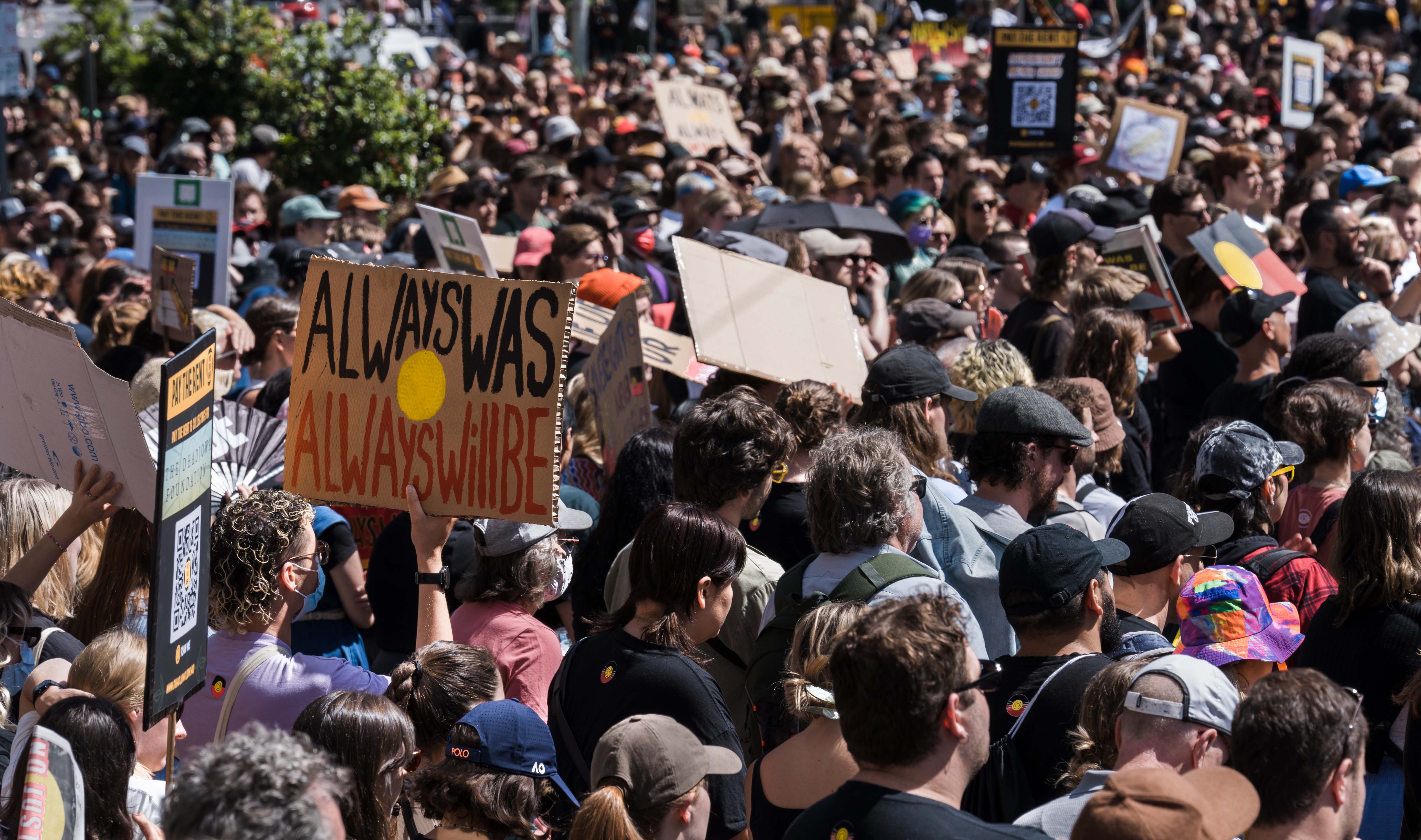
Here’s a Post-Jan 26 To Do List to take action for the rest of the year.
Australia's history includes widespread massacres of Aboriginal and Torres Strait Islander people.
There are currently two key mechanisms by which First Nations people can reclaim land in the western legal system: land rights and native title.
First Nations families whose loved ones have died in custody are leading the way for change. As the people most affected by deaths in custody, they are best placed to design solutions.
At the time of writing, 439 First Nations people have died in police custody in Australia since the Royal Commission into Aboriginal Deaths in Custody in 1991. None of these deaths have led to a single conviction of any person involved.
Talei Elu is a Saibai Koedal woman from Seisia — a small Torres Strait Islander community in remote Cape York. We yarned with Talei for our 5 Changemakers, 5 Days campaign.
The Coniston Massacre was the last documented massacre of First Nations people in Australia.
Mililma May is a staunch Danggalaba Kulumbirigin Tiwi woman and co-founder of UP. We yarned with Mililma for our 5 Changemakers, 5 Days campaign.
Apryl Day is a Yorta Yorta, Wemba Wemba and Barapa Barapa woman and founder of The Dhadjowa Foundation. We yarned with Apryl for our 5 Changemakers, 5 Days campaign.
April 2021 marks 30 years since the final report was released following the Royal Commission into Aboriginal Deaths in Custody.
An overwhelming majority of Australian citizens voted “yes” in a national referendum on 27 May 1967.
Join us for our Changing Systems Through Storytelling: Be The Change webinar to hear from First Nations storytellers and learn practical ways to make change with Common Ground.